How Long Does SEO Take to Work? Realistic UK Timelines
SEO takes 3 to 6 months to move rankings and 6 to 12 months for leads. See month by month timelines and dated results from 7 UK client campaigns.

On this page
- The typical SEO timeline, month by month
- How long do SEO changes take to show in Google?
- What our client SEO timelines show
- Why does SEO take so long to show results?
- Five factors that change your SEO timeline
- How long does local SEO take?
- How to tell if SEO is working before the leads arrive
- How to get SEO results faster
- Questions about SEO timelines
- Build your SEO strategy around the timeline
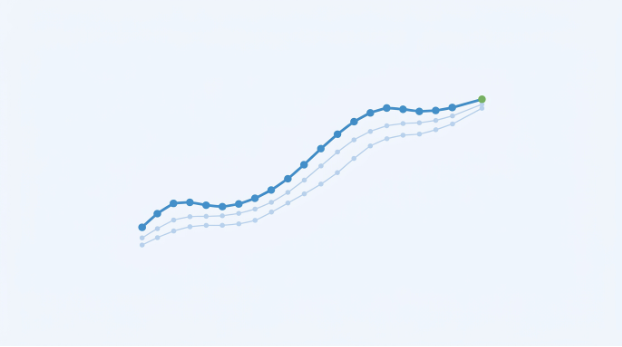
SEO usually takes 3 to 6 months to move rankings and 6 to 12 months to produce a steady flow of leads, and highly competitive national or international terms can take two years or more. That answer to how long does SEO take to work describes a typical SEO timeline for most UK small businesses and website owners, and Google’s own guidance on hiring an SEO gives a similar range of four months to a year. The cost of not knowing it is real: businesses that expect results in eight weeks often cancel at month four, just before the work starts to compound.
This guide is written by Lizzie, Head of Content Ops at Dandy Marketing. It sets out a typical SEO timeline, what Google says about how long its own systems take, and the dated results from seven of the client SEO campaigns we publish as case studies, so you can see how the curve looks in real UK businesses rather than in theory.

SEO timeline estimator
Answer three questions to see a typical timeline for a site like yours.
Want a timeline for your own site? Our free SEO opportunity review shows what is holding your site back and which keywords you can win first.
The typical SEO timeline, month by month
A typical SEO timeline runs in four stages: fixes and research in month one, early signals in months two to three, ranking movement in months three to six, and compounding traffic and leads from month six onwards. Each stage has different things to measure, and judging month three on leads is the most common reason SEO efforts and SEO campaigns get abandoned before meaningful traffic or leads arrive.
| Stage | What the SEO team does | What you can measure | What not to expect yet |
|---|---|---|---|
| Month 1 | Technical SEO audit, keyword research, fixes to crawling, site speed and broken links | Pages indexed, errors fixed | Ranking changes |
| Months 2 to 3 | Optimise key pages, publish new content, improve internal links, start link building | Impressions in Google Search Console, first long tail keyword rankings | Meaningful organic traffic |
| Months 3 to 6 | Expand content, build quality backlinks, refine pages that are close to page one | Rankings for target keywords, organic search clicks, early enquiries | Rankings for the hardest terms |
| Months 6 to 12 | Scale what works, update content, earn links from reputable sites | Organic traffic growth, leads and revenue from organic search | Results that stop if work stops |
| Year 2 onwards | Compete for broader, high-volume terms | Share of search, business value per visitor | Instant wins |
Our own SEO packages state the same expectation: "three to six months for rankings, up to a year for leads to start to follow".
What Google and independent data say about SEO timelines
Google says SEO needs four months to a year to produce results, and Ahrefs data shows most new pages do not reach Google's top 10 within their first year. In Google's 2017 video on how to hire an SEO, Maile Ohye said "SEOs need four months to a year to help your business first implement improvements and then see potential benefit" (Page One Power).
Ahrefs studied around 2 million pages and found that only 5.7% reached the top 10 for at least one keyword within a year of being published. The pages that did get there mostly took 61 to 182 days, and the average page in the top 10 was more than two years old (Ahrefs). That is the honest baseline: SEO results come from pages and sites that have time behind them.
How long do SEO changes take to show in Google?
SEO changes take anywhere from a day to several months to show in Google search results, depending on what changed: a new title tag can appear in one to two days, while a site move takes one to three months.
In October 2026, Google's Gary Illyes shared typical timings for Google's own systems at Search Central Live in Barcelona. The figures below come from a session recap reported by Search Engine Journal, and Google described them as reference points rather than deadlines (Search Engine Journal, October 2026).
| Change | Typical time | Slowest |
|---|---|---|
| Google discovers a new URL | About 20 hours | Weeks, or never |
| Google recrawls a known URL | About 30 days | Weeks, or never |
| Sitemap processed | About 24 hours | Up to 14 days |
| Title or snippet change shows | 1 to 2 days | Several weeks to months |
| Canonical change recognised | 1 to 3 weeks | Months |
| Site move settles | 1 to 3 months | 6 months to over a year |
| Recovery after a core update | 3 to 6 months | 6 months to a year |
This table explains why SEO feels slow even when the work is done quickly. A page edited today may not be recrawled for a month, and Google then needs further time to judge how users respond to it. If you change a page, wait at least four to six weeks before judging the effect, and check the "Last crawled" date in Google Search Console first.
What our client SEO timelines show
Across seven Dandy SEO clients with dated results, new websites took about a year to show strong growth, while established websites with technical problems grew fastest once those problems were fixed. The table summarises the published figures. These are our clients' reported results, not a promise: your market, budget and starting point will change the numbers.
| Client and sector | Starting point | Work began | Result and timeframe |
|---|---|---|---|
| C Kearney Roofing (local trade) | Brand-new website, no ranking history | 2024 | 178% year on year traffic rise, 288% more leads, 45 first-page rankings |
| Strength Ambassadors (London gym) | About 2,000 sessions a month, indexing issues | June 2020 | Over 15,000 sessions a month; 32 keywords in position 1 |
| Future Lift Services (lift and access) | Underperforming site, few enquiries | 2022 | Organic sessions from 348 in 2022 to 30,955 in 2025 |
| Loony Legs (online retailer) | Young site in a competitive market | March 2022 | 110% traffic rise, 27% more transactions, 544 first-page rankings |
| MGOC Spares (ecommerce) | Just migrated and re-platformed | December 2022 | 75% year on year organic traffic rise; 61% revenue rise |
| Cornish Lime (ecommerce) | Mature site, steady traffic | October 2022 | 67% higher organic conversion rate and 28% more revenue over 18 months |
Sources: Dandy case studies for C Kearney Roofing, Strength Ambassadors, Future Lift Services, Loony Legs, MGOC Spares and Cornish Lime.
New websites: plan for a full year
New websites take longest because search engines have no history, links or user data to judge them on. Lucky Voice's B2B karaoke site launched in January 2025 with no domain authority and no paid account history. The SEO process started with a full audit, then landing page optimisation about twice a month, four blog posts a month and a six-month content plan. The headline figures are for the first full year, and the work included catching problems that would have cost months: monitoring found a duplicate URL issue on sector pages and two product pages accidentally set to hide from search.
Established sites with technical problems: the fastest gains
Established websites with technical problems usually see the fastest SEO results, because fixing crawling and indexing releases value the site has already earned. Strength Ambassadors had about 2,000 sessions a month in June 2020, with cluttered navigation, broken internal links and pages Google was not indexing. Fixing the site structure, rewriting service pages around search intent and publishing long-form guides took the gym to over 15,000 monthly sessions, with 32 keywords in position 1.
The slow then steep curve: Future Lift Services
Future Lift Services shows the most common SEO shape: slow for the first year, then steep. Organic sessions grew from 348 in 2022 to 30,955 in 2025 after a site rebuild, location pages and a regular blog programme, and the share of organic sessions that became enquiries rose from 0.17% to 2.42%. Managing director Ryan Darcy said the old website "was holding us back and barely generating any enquiries". A business judging this campaign at month six would have seen a fraction of the eventual return.
Mature sites: SEO improves conversion, not just traffic
On a mature website, SEO results often show up as more revenue from the same traffic rather than more visitors. Cornish Lime's traffic was already steady when we started in October 2022, so the work focused on product landing pages, calls to action and social proof. Over 18 months the organic conversion rate rose 67% and revenue rose 28%.
Why does SEO take so long to show results?
SEO takes so long because search engines need time to crawl changes, gather evidence that users find a page useful, and see other reputable sites link to it, and none of those steps can be bought outright. Google weighs hundreds of signals, and three of the slowest are trust, links and competition.
- Crawling and evaluation. As the Illyes timings show, a known page is recrawled about every 30 days, and Google then has to assess how well it serves the search.
- Authority builds slowly. Quality backlinks are earned one at a time. Our Local SEO package, for example, includes one to two links a month, so a meaningful backlink profile takes many months to form.
- Competitors keep working. The pages you want to overtake are being improved too, and the average top 10 page is more than two years old.
Shortcuts make this worse. Black hat SEO tactics such as bought links can cause a manual action, and Google's typical time to lift one is one to two weeks after a fix, but rankings can take much longer to come back.
Five factors that change your SEO timeline
Five factors decide whether your SEO timeline is closer to three months or two years: website age and authority, keyword competition, technical health, content quality and the pace of the work. Use this table to place your own website.
| Factor | Speeds results up | Slows results down |
|---|---|---|
| Website age and domain authority | Established domain with existing links | New websites with no history or links |
| Keyword competition | Local and long tail keyword targets | National head terms dominated by big brands |
| Technical health | Fast site speed, clean site structure, pages indexed | Crawl errors, slow pages, JavaScript rendering issues |
| Content quality and search intent | High quality content that matches what searchers want | Thin pages, or content written for the wrong intent |
| Pace of delivery | Regular content creation and link building | Sporadic effort, long gaps between changes |
Is website age a ranking factor?
Website age is not a ranking factor in itself, but older sites have usually earned the links and history that make ranking faster. A brand-new domain starts with no backlink profile, which is why Lucky Voice and C Kearney Roofing measured their results in years rather than months.
High quality content that matches search intent
High quality content shortens an SEO timeline because Google ranks the page that best answers what people search for, not the page that uses the keyword most. Before writing, look at the search engine results pages for your keyword: if the top results are guides, a sales page will struggle, and if they are local service pages, a long article will too. Content quality and fit with search intent decide whether a page reaches page one in three months or never.
Site structure and technical SEO
A clear site structure speeds up SEO because search engines find, crawl and understand well-linked pages faster. Group pages by service or product, link each one from a relevant parent page, and keep important pages within three clicks of the homepage. Fixing broken links, redirects and slow pages early removes delays that would otherwise slow every later improvement.
Keyword competition and long tail keywords
Low competition keywords can rank in two to three months, while highly competitive terms can take two to three years (Orbit Media). A local roofer targeting "roof repairs Sutton Coldfield" competes with a handful of local firms; a national retailer targeting "roofing supplies" competes with brands that have years of links. Start with relevant keywords where you can realistically reach page one, and use those rankings to build authority for harder terms.
How long does local SEO take?
Local SEO usually shows results faster than national SEO, often within three to six months, because the competition is limited to businesses in the same area. The main levers are your Google Business Profile, location pages, reviews and local links. C Kearney Roofing launched with no ranking history; weekly technical checks, location pages for Sutton Coldfield and Lichfield, two posts a month and a small number of local links each month took it to 45 first-page rankings and 288% more leads.
Keep the Google Business Profile complete and active, with regular posts and reviews, alongside the website work, because the map pack and the organic listings are ranked separately.
How to tell if SEO is working before the leads arrive
You can tell SEO is working before leads arrive by tracking leading SEO KPIs in order: indexed pages, then impressions, then rankings, then clicks, then enquiries. Each one usually moves weeks or months before the next.
- Months 1 to 2: Check Google Search Console for pages indexed and crawl errors resolved.
- Months 2 to 4: Look for rising impressions for non-brand searches, even before clicks rise.
- Months 3 to 6: Track average position for your target keywords and the number of keywords on page one.
- Months 4 to 9: Measure organic search clicks and organic traffic in Google Analytics.
- Months 6 to 12: Measure enquiries, sales and revenue from organic search.
Our guides to measuring SEO success and using Google Search Console explain how to set these reports up. If impressions are flat after four months of consistent work, something in the SEO strategy needs to change; if impressions are rising, give the clicks and leads time to follow.
How to get SEO results faster
You can shorten an SEO timeline by fixing technical problems first, targeting winnable searches and improving pages that already rank on page two. None of these makes SEO happen overnight, but each removes a delay.
- Fix technical SEO before writing new content. Broken links, slow pages and indexing errors limit every page on the site. Our technical SEO checklist lists the fixes we check first.
- Target long tail and low competition keywords first. They rank sooner and send visitors with clearer intent.
- Improve pages in positions 8 to 20. These already have Google's attention; better content and stronger internal links often lift them faster than a new page would rank.
- Add internal links from your strongest pages. Internal links pass authority and help search engines find new pages sooner; Google's typical discovery time for a new URL is about 20 hours, but only if something links to it.
- Run Google Ads while organic rankings grow. Paid search covers the months before SEO pays, and its search term data shows which keywords convert.
Questions about SEO timelines
Can SEO work in 3 months?
SEO can produce early results in 3 months for low competition and local keywords, especially on an established site with technical problems to fix. For new websites or competitive terms, three months is usually only long enough to see impressions and early ranking movement.
Why is my SEO not working after 6 months?
SEO that shows no improvement after 6 months usually has one of three problems: the site cannot be crawled or indexed properly, the target keywords are too competitive, or the content does not match search intent. Check Google Search Console for impressions first. Rising impressions with few clicks point to titles and rankings; flat impressions point to technical or targeting problems.
How long does SEO take for a new website?
SEO for a new website usually takes 6 to 12 months to produce consistent organic traffic, because a new domain has no links or history. Both new sites in our case studies, Lucky Voice and C Kearney Roofing, measured their main gains over a year or more.
Is SEO dead now with AI?
SEO is not dead, but AI Overviews have reduced clicks from informational searches, which makes ranking for commercial and local searches more valuable. The same work that ranks a page, clear answers, evidence and authority, is what gets it cited in AI answers, which is why our packages include AI search optimisation.
What should SEO services deliver in the first three months?
SEO services should deliver a technical audit, keyword research, priority fixes and the first optimised pages in the first three months, with a clear report of what changed. A good SEO agency or SEO specialists will show you impressions, indexing and early ranking movement in this period, using SEO tools such as Google Search Console and a rank tracker. Be wary of any provider that promises page one rankings in weeks.
Build your SEO strategy around the timeline
Write down where you are today: monthly organic sessions, the number of keywords on page one and enquiries from organic search. Check them again at months three, six and twelve against the timeline above, and judge each checkpoint on the measure that stage can deliver.
SEO performance compounds: the traffic growth and business value in year two come from the work done in year one. If you want a realistic SEO timeline for your own website before you commit, our free SEO opportunity review shows what is holding your site back and which keywords you can win first.
About the author