
How To Grow Ecommerce Businesses with Digital Marketing

Growing an ecommerce business is a rollercoaster of emotions.
One month you’re flying – orders are pouring in, your return on ad spend is looking healthy, and you’re thinking, “We’ve finally cracked it.” Then the next month your ad spend creeps up, conversion rates drop, and you’re staring at your dashboard like it’s out to get you.
If that sounds like your experience, don’t worry – you’re not doing anything “wrong”. You’re just in the messy middle where most ecommerce business owners live.
Table of Contents
This guide is designed to be the one you actually use – not just a list of trendy tactics. We’re going to give you a practical, in-depth map of ecommerce digital marketing – from strategy, to attracting traffic, to conversion rate optimisation, and keeping customers coming back for more.
Whether you’re doing £250k/year and want to build some momentum, or you’re at £5m and scaling an ecommerce platform with a team, the fundamentals are the same. The difference is how you prioritise what really matters.
What is Digital Marketing in Ecommerce?
At its heart, digital marketing for ecommerce is the system you build to do three things:
- Get people to notice you (traffic)
- Turn browsers into buyers (conversion)
- Turn first-time buyers into loyal customers (retention)
If you can do those three things consistently well, you will be well on your way to a successful eCommerce business.
When people mention ecommerce marketing, they’re often talking about a mix of:
- Search engine optimisation (SEO)
- Paid media – Google Ads, paid social media ads, marketplace
- Content marketing – creating stuff that people actually want to read.
- Email marketing – keeping in touch with the people who’ve already shown they care
- Social media marketing – finding and engaging with your target audience, think instagram, TikTok etc
- Influencer partnerships – finding people who can help you reach your target audience
- Conversion rate optimisation (CRO) – making sure every single thing you do is actually working
The mistake most ecommerce businesses make is treating these as separate projects that you do one after the other.
But the best ecommerce marketing strategies work because all these channels support each other. SEO brings people who are actually looking for what you sell. Content answers the questions that people are asking. Paid advertising helps you scale up what’s already working. Email marketing keeps customers coming back for more. And CRO improves every single thing you do.
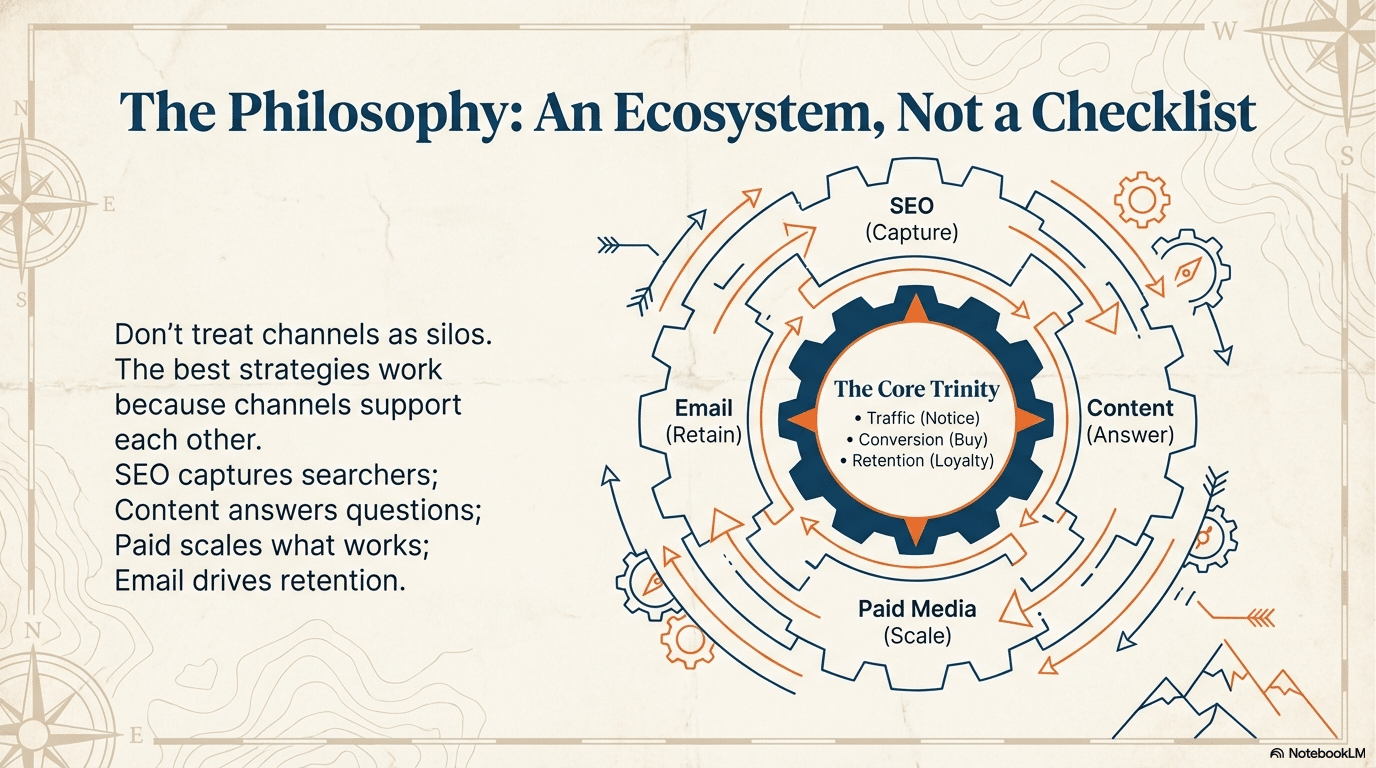
Think of it more like a sales funnel than just a list of things to do.
Step 1: Get Your Growth Strategy Straight
A strong digital marketing strategy for your ecommerce site needs to make some things crystal clear:
- Who your target audience is – and what they’re trying to solve for, what channels have their attention.
- Where you stand in the marketplace – and why people should choose you over the cheaper alternative, or competitors.
- What you’re actually offering – and how you’ll present it to the world
- What drives your growth – and where the profit is coming from
The Unit Economics Check
This is the part that tells you whether scaling is even possible.
You need some rough numbers for:
- Gross margin (what’s left over after you pay for the things you’re selling)
- Average order value (AOV) – how much do people spend with you on average?
- Contribution margin (after all the costs come out) – how much profit are you actually making?
- Acquisition costs (CAC/CPA) – how much did it cost you to get that customer in the first place?
- Repeat purchase rate – how often do people come back?
- Customer lifetime value (LTV) – how much do people spend with you over a lifetime?
If you don’t know these numbers, you’re flying blind.
Here’s a quick sanity check:
- If LTV is not meaningfully higher than CPA, you’ll struggle to make paid marketing work.
- If your margin can’t support paid traffic, you’ll need to focus on organic traffic (SEO, social media, partnerships) to carry the load.
The 70/20/10 Rule in Digital Marketing
One approach is to chunk your budget into 3 sections.
- 70% on what already works – the marketing channels that are actually delivering results. E.g More SEO budget
- 20% on improvements – new creatives, CRO tests, landing page upgrades – E.g Redesign product page
- 10% on experiments – trying out something completely new. E.g TikTok Ads
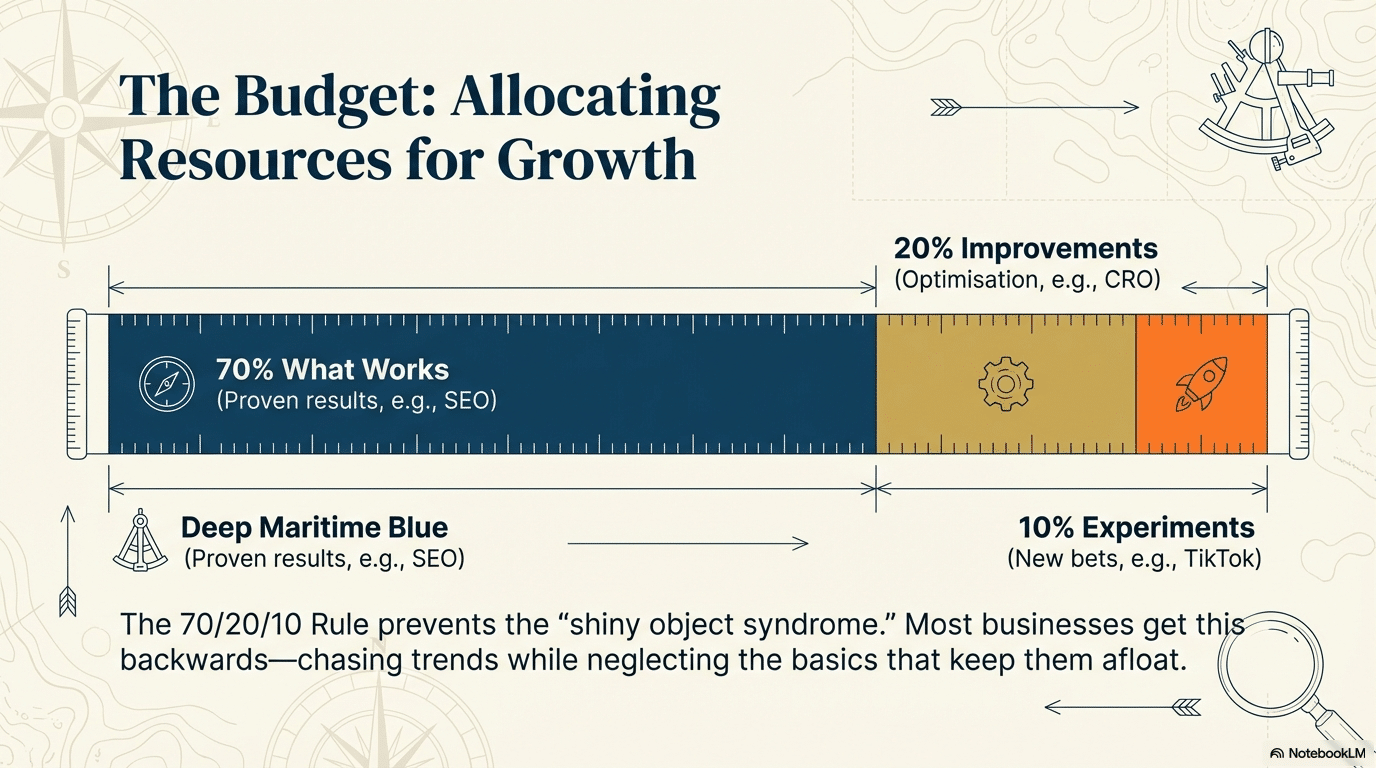
Most e-commerce businesses get this backwards – they chase new and exciting things because they’re fun, while neglecting the basics that keep them afloat.
The 3-3-3 Rule
To keep things consistent across all channels you are spending on, you need to be filter your focus.
Try this:
- 3 channels you’ll commit to this quarter
- 3 customer pain points you’ll speak to
- 3 messages you’ll repeat everywhere – site, ads, email, social media
Most e-commerce websites lose sales because they’re not clear about what they’re doing.
Step 2: Understand Your Customer Journey
You don’t just need a target audience – you need to know how they actually buy from you.
A simple customer journey for an online store usually looks like this:
- Discovery (they find you via search engine, social media, paid ads, or a friend)
- Consideration (they compare, read reviews, check delivery and returns)
- Purchase (checking out, trust, payment options)
- Post-purchase (delivery experience, follow up emails)
- Repeat (retention, new needs, upgrades, gifting)
Your job in ecommerce marketing is to remove any friction at every single stage. No matter how small it may seem.
The “Why Didn’t They Buy?” Checklist
If you’re getting traffic but not conversions, it’s probably because of one of these commonly overlooked issues:
- The product is unclear (all about benefits, but they are buried somewhere, and the specs are confusing)
- The price feels riskier than it is (no proof, no guarantee, or just 1 or 2 dodgy reviews)
- Delivery/returns aren’t clearly explained
- The brand feels untrustworthy
- The checkout process is just plain clunky
These will create friction, and as I said above, you need to remove every bit of friction possible.
Step 3: Building A Strong Digital Presence
Before you go throwing more money at paid media, make sure your ecommerce store is capable of converting visitors into buyers. That means getting the fundamentals right.
Core Site Essentials
- Your site loads quickly – especially on mobile. If it doesn’t, you’re already losing people.
- Navigation needs to be clear and intuitive, and your categories shouldn’t be confusing.
- You need to make it easy for visitors to find what they’re looking for with a good on-site search tool. Some WordPress or Shopify websites will have this by default, but a good alternative is DooFinder.
- Build trust by including things like reviews, guarantees, delivery information and contact details. Trustpilot may be a bit expensive, but there are alternatives like reviews.io.
- Your product pages should be designed to sell – more on that in the next section.
If your ecommerce site is slow and difficult to navigate, every single marketing strategy is going to cost you more.
Step 4: Search Engine Optimisation For Ecommerce Websites
SEO is still one of the best long-term growth strategies for ecommerce.
Done properly, search engine optimisation can get you:
- More qualified organic traffic (i.e. people who are actually looking for your product)
- Lower costs over time, as you don’t have to pay for every single visit
- Durable visibility on search engine results pages
- Good SEO influences good AI visibility in tools like ChatGTP, Gemini etc.
Category Pages vs Product Pages
Most ecommerce sites really under-invest in their category pages. They’re often the biggest SEO opportunity you’ve got because:
- They target broader search terms
- They capture users earlier on in the buying decision
- They feed users into product pages
Here are some best practices for category pages:
- Write intro copy that’s genuinely helpful (not just keyword stuffing)
- Make sure your filters work on mobile
- Write FAQs based on real questions that customers have
- Internal link to relevant guides and comparisons
- Think of ways you can expand your category pages with different variables and attributes.
Do not neglect Technical SEO
Technical SEO might not be glamorous, but it can deliver a really big payoff. Here are a few things you should focus on:
- Make sure you can control how Google indexes your site (avoid duplicate URLs from filters, for example)
- Use canonical tags and pagination correctly
- Use structured data (things like Product, Review, or FAQ where it’s relevant)
- Make sure your internal linking is clean
- Fix up any crawl traps or 404s you find
If you want a competitive edge, technical SEO is often where you find it – because it’s something most people don’t bother with. As your e-commerce website scales and gets bigger, technical SEO becomes more and more important.
Step 5: Content Marketing That Actually Works
Here’s the thing: most ecommerce content is written for Google, not people. And customers can tell the difference.
Strong content marketing can support ecommerce marketing by:
- Answering questions that are blocking the sale
- Building authority and trust
- Creating assets you can reuse in email marketing and social media
Writing Content That Actually Drives Revenue
Here are a few formats that actually work:
- Buying guides: e.g. “How to choose X”, or “What size should I buy?”
- Comparison pages: e.g. “X vs Y”, or “Best X for beginners”
- Use-case content: e.g. “Best X for small flats”, or “Best X for winter commuting”
- Care and maintenance: e.g. “How to look after X”, to reduce returns and improve reviews
And don’t forget to include user-generated content (photos, reviews, testimonials) wherever you can – it increases trust and improves conversion.
For one of our clients Loony Legs we took that exact approach, hitting potential customers when they are researching for outfit ideas or advice

Step 6: Paid Media That Actually Scales
Paid Media is a great channel, and definitely one that you should be looking at to support growing your eCommerce business. It’s also where a lot of ecommerce growth plans either accelerate fast… or quietly bleed money.
The difference usually isn’t the platform. It’s the foundations underneath it.
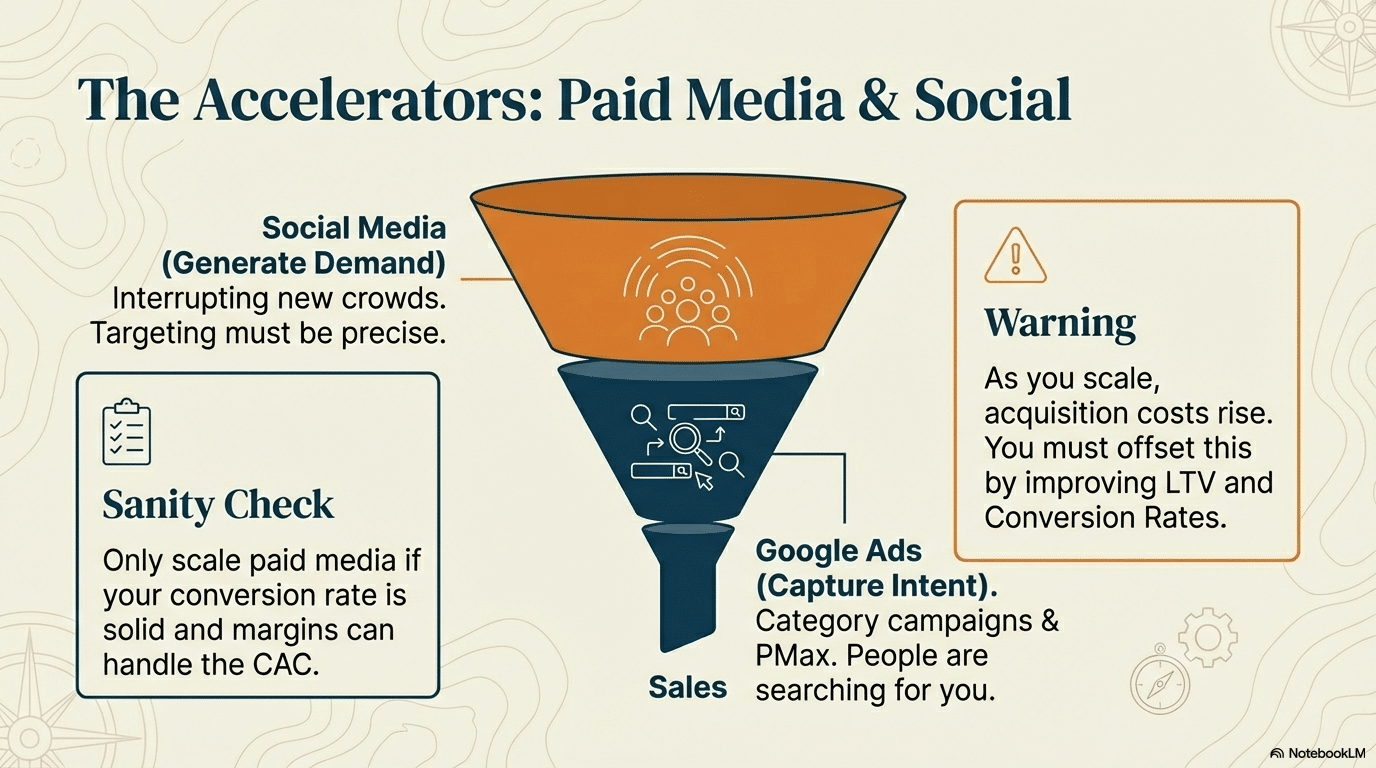
When we talk about paid media for ecommerce, Google Ads deserves special attention because it captures demand that already exists. People aren’t being persuaded to want a product — they’re actively looking for it.
When Google Ads works best for ecommerce
Google Ads tends to perform well when:
- You sell a product people already search for
- Your pricing is competitive for the perceived value
- Your product pages are clear, fast, and trustworthy
- You understand your acquisition costs and margins
It struggles when:
- You’re trying to create demand for something unfamiliar
- Your site relies on heavy education but your ads don’t reflect that
- Your ecommerce site leaks conversions after the click
This is why paid advertising should never be the first thing you “turn on”. It amplifies what’s already there — good or bad.
Google Ads campaign structure that scales
A clean structure matters more than clever tricks.
A typical ecommerce Google Ads structure that works looks like this:
1. Brand campaigns (low budget, not always needed unless you have pesky competitors)
This protects your brand name and captures high-intent traffic.
Yes, some of these users might find you organically. But:
- Competitors often bid on brand terms
- Brand campaigns usually have excellent ROAS
- They give you message control on the search engine results pages
If you’re not running brand campaigns, you’re leaving money (and control) on the table.
2. Product and category campaigns (the main focus)
These are your core revenue drivers.
Structure them around:
- Clear product categories
- Logical groupings (not “everything in one campaign”)
- Dedicated landing pages, not generic homepages
For larger catalogues, this is where Shopping, Performance Max, or feed-driven campaigns come into play — but only if your feed is clean and well-managed.
A messy feed = wasted ad spend.
3. High-intent generic campaigns
These target broader searches with clear buying intent.
Examples:
- “best running shoes for flat feet”
- “adjustable dumbbells 20kg”
These campaigns work best when paired with:
- Strong category pages
- Comparison content
- Clear filters and trust signals
Sending this traffic to weak pages is one of the fastest ways to inflate acquisition costs.
Shopping ads, Performance Max, and reality
Shopping ads and Performance Max can be incredibly effective for ecommerce.
But they’re not magic.
They work best when:
- Your product feed is accurate and detailed
- Titles and descriptions match how people actually search
- Images are clean, high-quality, and compliant
- You’ve excluded poor-performing products
Common mistakes:
- Letting Performance Max “run everything” without exclusions
- Including low-margin products that can’t support paid traffic
- Ignoring search term insights because “Google handles it”
Google Ads still rewards active management. Do not just set and forget your campaigns, you need to keep on top of them.
Paid social ads: creating and capturing demand
While Google Ads captures existing intent, paid social ads do a different job. They create demand.
Platforms like Meta (Facebook and Instagram), TikTok, Pinterest and LinkedIn allow ecommerce brands to reach potential customers before they actively search. That makes paid social incredibly powerful — and easy to misuse.
The biggest mistake ecommerce businesses make with paid social is treating it like Google Ads. It’s not search. It’s interruption.
When paid social works best for ecommerce
Paid social performs best when:
- Your product is visually appealing or easy to demonstrate
- You can communicate the value quickly
- You have strong creative (video, UGC, lifestyle imagery)
- You understand your audience’s motivations and objections
It struggles when:
- Your product requires heavy explanation but your ads don’t educate
- Your creative looks like generic ads
- You rely on discounts as the only hook
In short: on social, creative is the targeting. tiniest tweak to your ad can make a huge difference not making tiny tweaks to your bids.
Structuring paid social for scalable growth
A simple, scalable paid social structure usually includes:
1. Prospecting campaigns
These introduce your brand to new audiences.
Use:
- Broad targeting with strong creative
- Interest-based or lookalike audiences where appropriate
- Messaging that speaks to problems, not just products
The goal here isn’t immediate ROAS perfection. It’s efficient customer acquisition.
2. Retargeting campaigns
Retargeting is where paid social often becomes profitable.
Focus on:
- Website visitors
- Product viewers
- Cart abandoners
Your messaging should shift from discovery to reassurance:
- Social proof and urgency
- Reviews and testimonials
- Delivery and returns
Step 7: Social media marketing and social commerce
66% of Facebook users like or follow a brand on the platform.
Social media platforms aren’t just billboards in the digital highway; they are interactive forums where your brand can engage with potential customers in real-time. Through creative content for social media, strategic advertising, and community building, your e-commerce business can carve out its own niche in the bustling social media ecosystem.
Prior to putting this eCommerce marketing approach into practice, make sure you:
- Get as much information as you can about your target audience: Discover the demographics of your target market by finding out where they live, how old they are, what languages they speak, and what they like and dislike.
- Select the channels you want to use to market your brand: Examine each network’s demographics to determine which ones are best for your company. Find out how many users they have, how old they are, where they are, and other relevant information. Additionally, conduct research to find out which platforms are most advantageous for eCommerce companies.
- Keep a watch on your rivals: find out what they’re posting on social media. Look at the eCommerce marketing strategies they employ, the content and frequency of their posts, the networks they use, and the user engagement strategies they employ.
Social media marketing only works if you think of it as a whole system – all the bits that go together.
There are two jobs social media can do for you:
- Making people want what you’ve got (demand creation)
- Getting them to actually buy it (demand capture)
With social commerce, that second part gets a whole lot easier – customers can now buy from you right on the platform.
Practical things to sort out first:
- pick the right social platforms (don’t try to be everywhere)
- come up with some simple content themes that you can use again and again (so you’re not making up new stuff all the time)
- use product tagging where it’s available
Influencer marketing (without making a total fool of yourself)
Influencer marketing only really works if:
- the influencer has got a following that’s right for you
- the influencer already uses stuff like what you’re selling
- the content the influencer creates feels like a real recommendation, not just an ad
Start small with influencer partnerships and then see what happens – measure the outcomes before you start throwing a lot of cash at it.
Step 8: Email marketing (the most underrated way to grow your business)
49% of users prefer to receive promotional emails from retail brands they like weekly.
In an age where inboxes are inundated with promotions, personalised and timely emails stand out like beacons. By nurturing your email list through thoughtful segmentation and content curation, your brand can become a welcome guest rather than an unwarranted intrusion.
Implementing email warm up tools can help ensure your messages reach inboxes rather than spam folders, which is crucial when you’re establishing new email addresses or ramping up outreach campaigns.
If you want to see some steady growth, sort out your email marketing.
Why? Because email marketing:
- gets you off the need for paid ads
- improves customer loyalty (ie they keep coming back)
- gets people to spend more each time they come back
- makes each customer worth more in the long run
The email flows you need for ecommerce
If you do just one thing, make sure to set up these:
- welcome email (just a little bit about you and your best stuff)
- abandoned basket (just a quick reminder – and maybe address some objections)
- browse abandonment (help them make up their minds)
- post-purchase follow up (account setup, care tips, reviews, suggestions for more stuff)
- win back (get customers back who’ve gone cold)
And don’t forget – segmentation is key.
Segment by:
- what people buy (or don’t buy)
- what they’re interested in
- how valuable they are to you
- new vs returning
That’s how you turn customers into loyal fans.
Step 9: Conversion rate optimisation (CRO)
CRO is where a lot of the hard work of ecommerce marketing suddenly becomes a lot easier to do.
Why? Because if you can just get more people to buy, every channel in your business just works better. For example, if you can get conversion rate up from 1.5% to 2.0%, you’ve instantly got a 33% better result from every channel.
Optimising product pages
To get more sales from your product pages, think about:
- giving each product a clear name that tells people what it is
- listing all the benefits in simple bullet points
- using good images that show the product and how it fits together
- including reviews and answers to common questions
- putting the delivery and returns info right at the top
- showing trust symbols like payment logos, guarantee seals and real contact detailsbut you can still make good decisions by
- comparing channel trends over time – or at the very least, keep an eye on how things change
- tracking your blended CAC (total spend divided by new customers) – that way you can see what’s really working for your business
- monitoring your contribution margins – don’t get caught out by sneaky losses
Use your data to gather some actual insights — then go ahead and adjust your marketing plans based on what you’ve found out, rather than just going with a hunch.
Checkout processes: remove friction
Common conversion killers:
- Forced account creation
- Surprise shipping costs
- Too many steps
- Weak error handling on mobile
Quick wins:
- Offer guest checkout
- Make delivery options clear early
- Add express pay (Apple Pay/Google Pay/PayPal)
CRO testing: what to test first
Start with high-impact areas:
- Product page layout and copy
- Add-to-cart and checkout
- Category page filtering
- Shipping/returns messaging
Don’t test button colours. Test clarity.
Step 10: Retention
Here’s the blunt truth:
If your business relies entirely on first-time purchases, acquisition costs will eventually crush you.
Retention is how you:
- Improve profit per customer
- Build repeat purchases
- Foster customer loyalty
Retention ideas that actually work:
- Better post purchase follow ups (education, support, community)
- Loyalty programmes (done simply)
- Subscription/replenishment where relevant
- Personalised recommendations
Even small changes in retention can transform your cashflow.
How Dandy Marketing Grew an eCommerce client
To illustrate exactly how to grow an ecommerce business using digital marketing methods, here’s how Dandy’s SEO and PPC experts were able to increase a client’s organic and paid traffic, resulting in overall growth for their ecommerce store.
Objectives
- Conduct a comprehensive Technical SEO audit and resolve identified issues
- Enhance visibility and improve rankings through on-page optimizations
- Boost organic traffic with targeted content strategies
- Improve user experience to increase conversion rates
- Leverage PPC campaigns for immediate traffic and revenue growth
Approach and Implementation
Step 1: SEO Audit
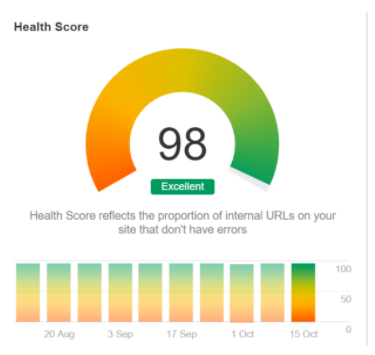
Our collaboration with The Goodness Project began with a meticulous Technical SEO audit. We pinpointed essential modifications to canonical tags, meta elements, site maps, pagination, and error responses. Post-audit, our efforts were concentrated on:
- Technical Optimisations: A comprehensive landing page enhancement strategy was devised, leading to considerable ranking improvements.
- Internal Link Review: Correcting broken links and optimising the link structure streamlined both user navigation and crawler accessibility.
- UX Refinements: Intuitive changes to design and checkout processes were pivotal to advancing conversion rates.
Step 2: Content Strategy
Aiming to prominently position The Goodness Project within vegan and free-from communities, we:
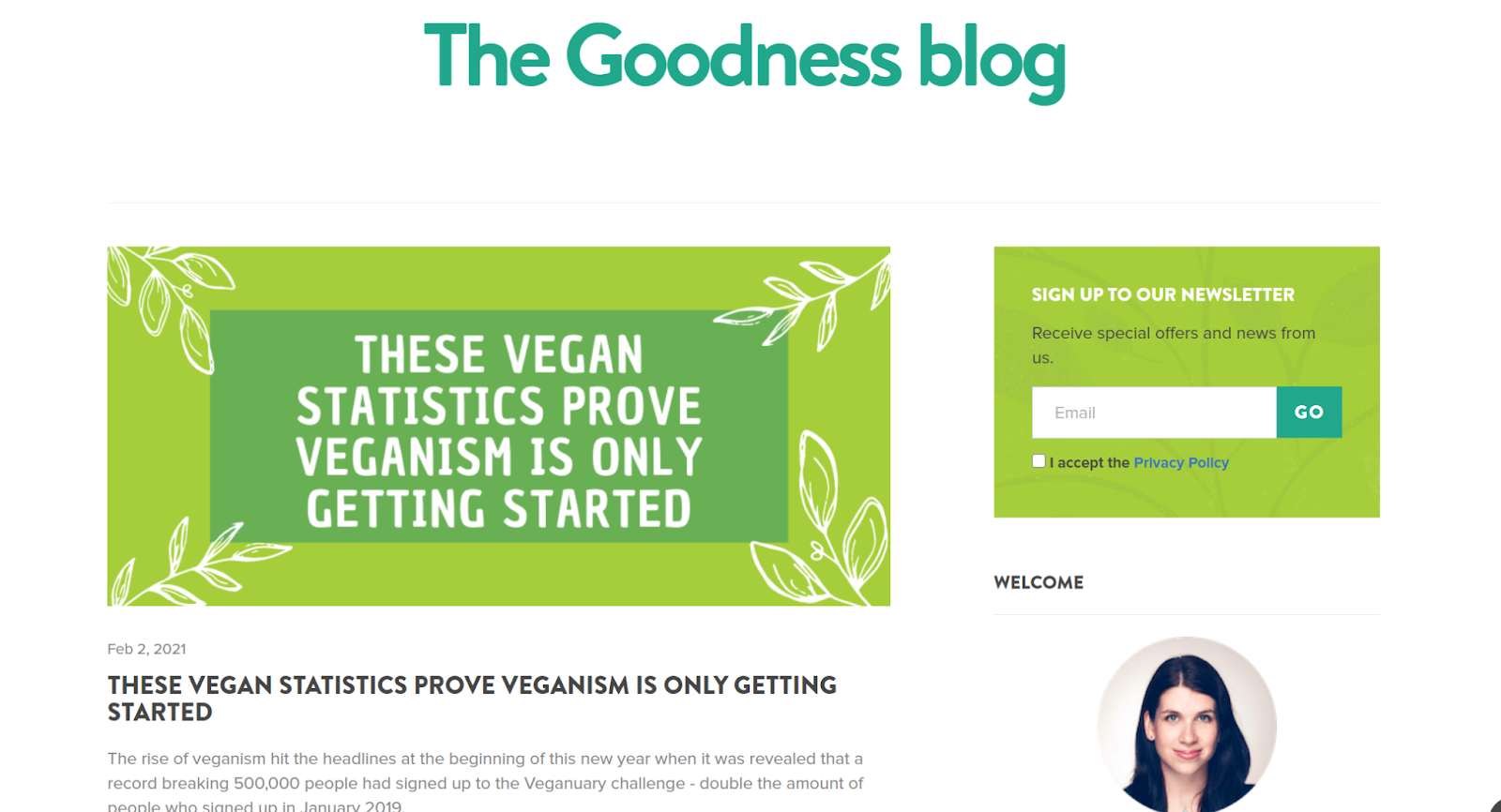
- Keyword Research: Identified high-impact keywords driving unprecedented traffic levelling beyond seasonal peaks.
- Content Development: Longform articles on trending vegan topics led to a stellar 569% upsurge in blog traffic.
- Link Building: Executed a robust outreach strategy, enhancing visibility via established platforms and reclaimed historical links.
Step 3: PPC Outcomes
Capitalising on incisive keyword insights, we:
- AdGroup Formation: Curated purpose-built AdGroups for an array of PPC campaigns.
- Account Overhaul: Introduced new account structures, compelling ad copy, tactical extensions, and strategic device bidding.
- Google Shopping Integration: Set up a product feed that amplified bestsellers, optimally positioning the brand in paid media spaces.
Results
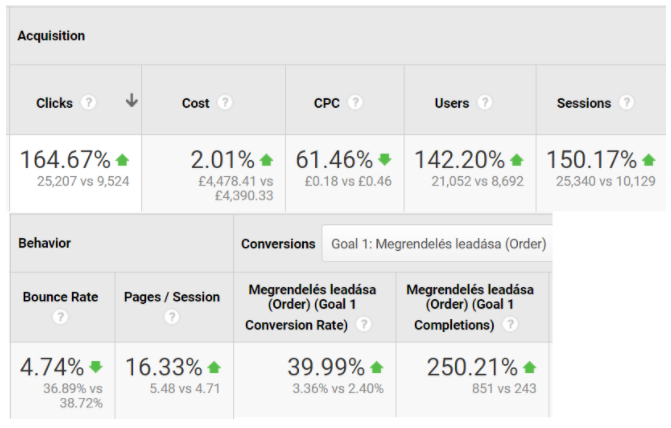
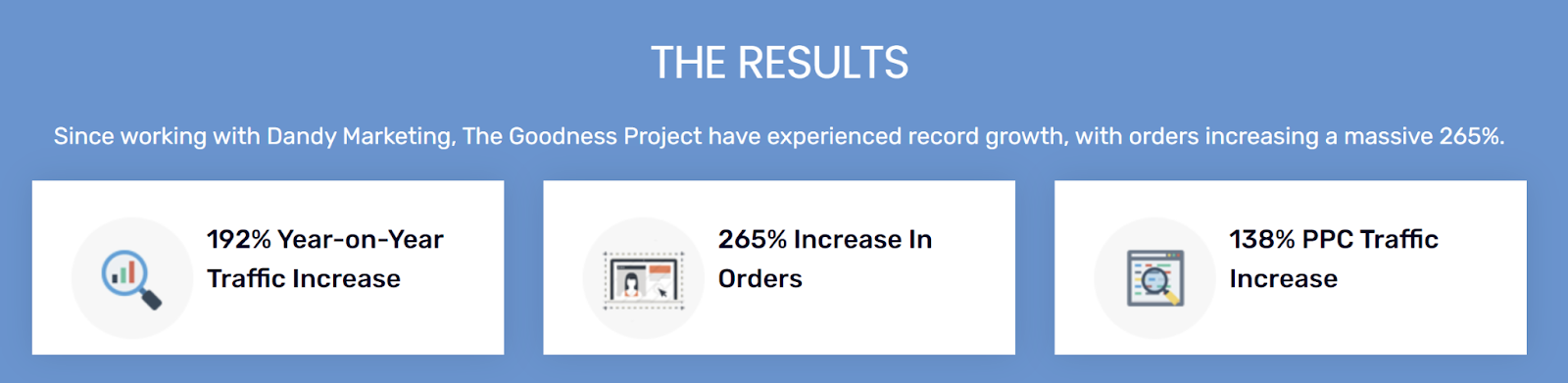
Our strategies yielded tangible results. Notably, there was a 157% hike in overall traffic, which was a remarkable 60% increase year-on-year. PPC campaigns, coupled with our UX strategies and the influx of lockdown-induced online shopping, significantly elevated order numbers on the platform.
While ad spending witnessed a modest rise of 2%, our optimisations drastically cut CPC by 61%, directing a much more extensive stream of converting traffic to the website.
Read more on this case study here.
Practical ecommerce audit checklist
Use this as a simple health check for your ecommerce digital marketing.
Strategy
- Do we know our true acquisition costs by channel?
- Is customer lifetime value clearly higher than CAC?
- Are we focused on 3 priority marketing strategies, or trying to do everything?
SEO and organic traffic
- Are category pages optimised and helpful?
- Do we have content that targets high-intent and comparison keywords?
- Are technical SEO issues holding back search rankings?
Paid media
- Are we sending paid traffic to pages designed to convert?
- Do we have a clear structure for Google Ads and paid social?
- Are we testing creative regularly, not just bids?
Email marketing
- Are core flows live and performing?
- Is segmentation based on purchase history and behaviour?
- Are we actively driving repeat purchases?
CRO and UX
- Is the checkout process frictionless on mobile?
- Are delivery and returns clear early?
- Do product pages answer the main buying objections?
Looking for a digital marketing strategy to grow your ecommerce business?
Digital marketing is not an addendum to your successful ecommerce store; it’s central to its existence. By crafting a coherent and dynamic digital strategy, you can steer your online venture towards unprecedented growth and resilience in the face of the ever-changing digital landscapes. It’s time to set sail in the digital waters, and with these transformative strategies, there’s no limit to what your e-commerce business can achieve.
At Dandy, we’re a to-the-point digital marketing agency providing specialist SEO packages, PPC management and digital marketing consultancy services.
So, if you’re ready to take your digital marketing efforts to the next level, get in touch with us today. We’re a friendly bunch that’s always happy to chat!
Grab a free SEO audit to get started.
How to grow your eCommerce business FAQs
What is ecommerce digital marketing?
Ecommerce digital marketing is the use of digital marketing channels to drive traffic to an online store, convert visitors into buyers, and increase repeat purchases through retention.
Is digital marketing essential for e-commerce growth?
Yes, digital marketing is crucial for the success of e-commerce businesses in today’s market. With an ever-growing number of consumers turning to online shopping, having a strong digital presence is necessary to stand out and attract customers.
What are some effective strategies for growing an e-commerce business through digital marketing?
Some key strategies for e-commerce growth through digital marketing include SEO, social media marketing, email marketing, content marketing, and paid advertising. These tactics can help increase online visibility, engage with customers, and drive conversions.
What are the 4 types of digital marketing?
A common way to group the “big four” is:
Search (SEO and PPC)
Social (organic social and paid social)
Email (CRM and automation)
Content (blogs, guides, video)

How to Create Landing Pages That Convert
January 23, 2026
8 Impactful Ways To Improve Your Digital Marketing Strategy
April 16, 2024
5 Essential Marketing Tips For Beginners
June 20, 2023