
What is SEO and how does it work for small businesses?


There’s no doubt about it, in 2026 every small business should have an SEO strategy (search engine optimization) to be able to stand out from the crowd.
68% of online experiences begin with search engines.
Whether you’re selling a service or looking to grow your eCommerce business, in B2C or B2B, if you’re not ranking on Google search results you simply won’t be getting great levels of traffic to your website.
But it’s not all doom and gloom! The Dandy team is here to explain everything about small business SEO and how with a bit of effort and patience, you can watch your company rise up the search engine rankings.
Let’s dive into what SEO is and how it works for small businesses, and why it’s essential for your small business to have a solid SEO strategy.
What is SEO?
SEO (Search Engine Optimisation) is the all-encompassing practise of assisting your website in ranking higher in search engine results.
When you put something into Google, Google must then decide which websites to display to you.
It considers hundreds of variables known as “ranking factors.“, such as your off page SEO (backlinks) and on page SEO elements (e.g blog content, meta description etc.)
Most folks don’t even look past the first five results. So, if you’re not ready to try PPC in order to appear in paid search results, the only way to get on that first page is to conduct SEO.
SEO helps your website appear in the top 5 search results for relevant search queries, increasing organic website traffic to your organisation.
👉 In 2026, SEO now means showing up both in traditional search engine results pages and in AI-powered “answer engines” like Google AI Overviews and chat tools.
How do search engines rank websites?
Search engines such as Google and Bing employ a variety of ranking factors to determine and deliver the most relevant material for a given search term.
However, before they can do so, search engines must crawl and index websites. Here’s what crawling and indexing are all about.
Crawling
Yep, it sounds a tad creepy, but crawling is a method of discovery that occurs when search engines dispatch crawlers or spiders to find refreshed and new content.
Search engine crawlers examine web pages and follow links on those pages, just as you would if you were exploring web material.
They navigate from link to link, returning data about those web pages to Google’s computers.
Make sure that every single page of your website is crawled if you want to be visible in organic search results.
Indexing
Indexing is the process through which search engines, such as Google, organise information prior to a search in order to offer quick results to users’ requests.
In general, Google and other search engines have structured data about web pages and other content that they are aware of.
Once these pages have been crawled then they have the opportunity to be indexed. Search engines may use the information they have about these pages and their content allowing them to decide whether or not to include this content in their search results.
How small and local businesses can use SEO effectively
Let’s look at some of the components that can influence your search engine optimisation ranking.
Content Marketing
Prioritising your content marketing strategy in your SEO approach will result in new, informative pieces of material that use your most relevant keywords, which you’ll find by conducting keyword research.
More importantly, Google prefers new and updated material. Newly published material is quickly indexed and helps to boost your ranking. The more material you add, appropriately placed around your keyword research the higher your SEO ranking tends to be.
Think…
- Blog posts and articles
- Social media content
- Ebooks and whitepapers
- How-to guides and tutorials
- Videos and audio recordings
- Infographics or other visual content.
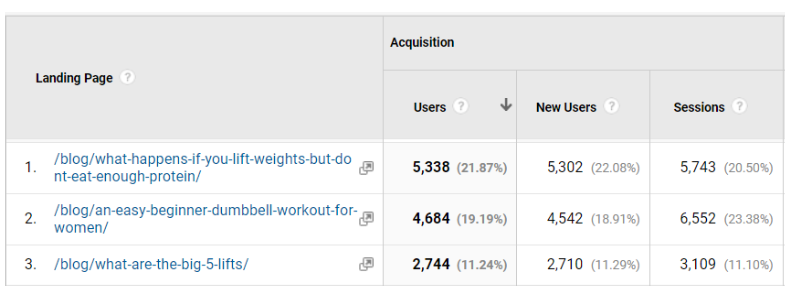
Building a content and blogging strategy for your small business can drive huge amounts of top-of-the-funnel traffic to your website, capturing all of those loose leads you might miss out on without any SERP rankings.
Just look at the monthly traffic these three blogs bring in for one of our clients:
Refreshing Content
Creating new material isn’t the only approach to keep your content current.
You can additionally keep your content fresh by upgrading posts, revising them to make them more effective, or gradually adding new information and statistics.
Though developing content requires time and resources, it will more than pay for itself in the long run.
Consumers require quality content for a deeper understanding of the value your organisation can deliver. Search engines LOVE exceptional content.
On-page SEO
On-page SEO (sometimes known as “on-site SEO”) is the practice of optimising the content of web pages for search engines and users. On-page SEO practises commonly used include optimising title tags, meta descriptions, content, internal links, and URLs.
When content contains the same SEO keywords as your search query, this is the most fundamental indicator that it is relevant. When it comes to websites, for example, if those keywords occur on the page or in the headings or body of the text, it’s a clear indication to Google what the page is about and what potential keywords the page should rank for.
Common examples of on page SEO include:
- Headings
- Sub-headings
- Internal linking
- Images
- Alt-text
- Keywords
- Mobile friendliness
Off-page SEO
Off-page SEO refers to operations performed away from a website in order to improve the site’s search engine rankings. Building backlinks, boosting branded searches, and increasing interaction and shares on social media are all common off-page SEO strategies.
Here’s a list of great link building methods:
- Outreach
- Digital PR
- Broken link building
- Guest blogging
- Link reclamation
According to a HubSpot survey, 75% of SEO is off-page and 25% is on-page.
In other words, off-page SEO refers to anything you do outside of your website to make Google and other search engines regard your website as trustworthy and authoritative.
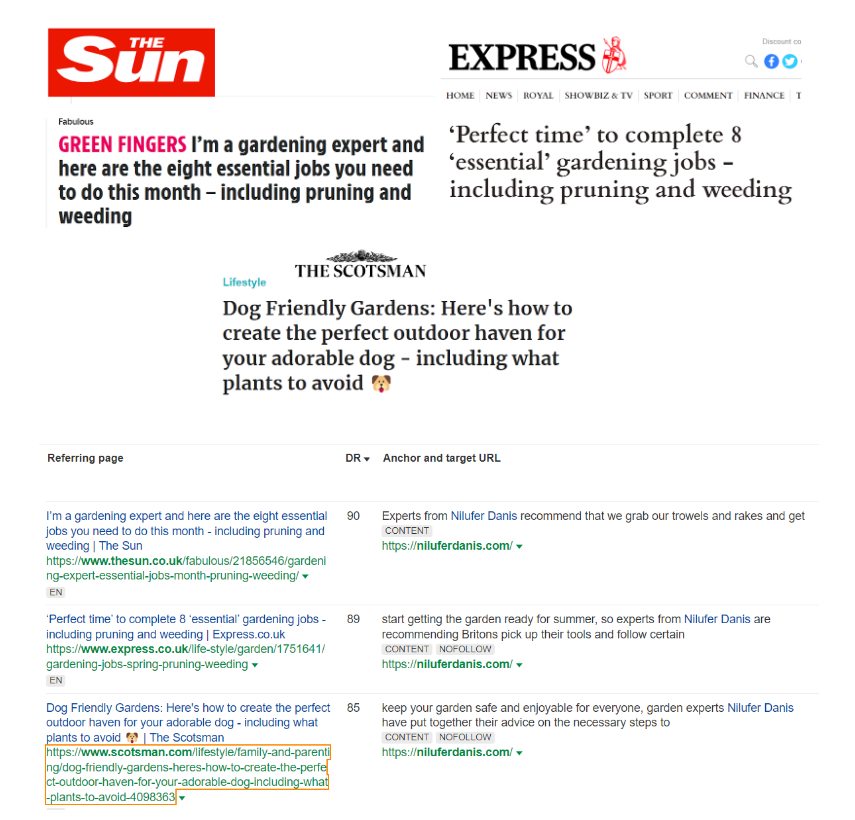
For example, for our client Nilufer Danis we got them featured in The Sun, The Express and The Scotsman simply by providing some expert tips.
Local SEO in 2026
Local SEO is all about helping people nearby actually find and choose your business when they search on their phone or laptop. It covers things like local map results, “near me” searches and the new AI style answers that take a user’s location into account. When you get this right, you are not just visible, you are the obvious local choice.
A well set up Google Business Profile is often the best place to start. Pick the right categories, list your services, add real photos, post updates, answer common questions and stay on top of your opening hours. For a lot of small businesses this one profile can drive a surprising amount of calls, messages and visits.
You can also give yourself an edge with hyper local content. That simply means creating pages and posts that mention real areas, neighbourhoods and landmarks your customers recognise, and using the language they actually use. Someone in your town should read it and think, “Yes, this is clearly for people like me, in my area.”
Local SEO focus areas (small business)
| Area | What to do in 2026 for small/local businesses |
| Google Business Profile | Complete every field, choose precise categories, add services, photos, posts, and answer FAQs; keep opening hours accurate. |
| Reviews | Build a repeatable process to request and respond to Google reviews and other key platforms. |
| Local content | Create pages and posts targeting your city, suburbs, and micro‑areas plus common local questions. |
| Local links | Earn links from local news, blogs, directories, sponsorships, and partner sites. |
| On‑site signals | Show clear address, service area, directions, and contact options on your site. |
How SEO works step by step for a small business
Here is a simple way to think about SEO in 2026, without any jargon.
- Learn what your customers ask: Collect the questions people ask you in emails, calls, DMs and in person. Then, where you can, check how they search for those topics online. This gives you the language and ideas you should build content and search intent around.
- Improve your key pages: Make sure your main service pages clearly explain what you do, who it is for and where you offer it. Add clear calls to action like “Call us,” “Get a quote” or “Book now” so visitors know what to do next.
- Add helpful supporting content: Create blogs, guides, checklists and FAQ pages that answer common questions people have before they are ready to buy. Link those pages back to your main services so visitors can move from learning to enquiring in a couple of clicks.
- Sort the technical basics: Your site should work well on a phone, load fairly quickly, be secure and be easy to move around. Fix broken links and very thin pages where you can. You do not need perfection, just a site that feels smooth and trustworthy.
- Grow your authority and local signals: Keep improving your Google Business Profile, regularly ask for reviews and look for good opportunities to earn links and mentions from local sites. Over time this builds your reputation in the eyes of both people and the major search engines.
- Measure and tweak regularly: Check how many people are finding you, which pages they land on and what leads or sales come from search. Use that information to improve underperforming pages, answer new questions and double down on what is working.
👉 Grab Your Free SEO Audit Today
Is SEO still worth it for small businesses in 2026?
Yes, it absolutely is. People still turn to search when they need a local service, and a strong presence there can become one of your most reliable sources of enquiries. The way results are shown is changing with AI and rich results, but the goal is the same: help search and AI tools understand that your business is real, relevant and trusted.
For most small businesses, a realistic, locally focused SEO plan, combined with consistent effort, usually starts to pay off over six to twelve months. It is not instant, but it can keep growing and supporting your business long after you have done the work.
Looking for expert SEO services for your small business website?
We hope you found this guide to SEO simple, helpful and to the point, just like we are.
Remember that search engine optimisation takes time to produce results, which is why our marketing experts are here with the SEO tools to take tout small business to the next level.
We will collaborate with you to identify your target audience and what they are looking for, and then we will create high-quality, engaging content that is optimised for the keywords you need to rank for.
Considering SEO management services? Why not give us a shot? To get you started, we even provide a free, no-obligation website SEO evaluation.
Check out our SEO packages or Book Your Free SEO Audit today!
What is SEO and how it works for small businesses FAQs
Is SEO worth it for small businesses?
Yes, SEO is still absolutely worth it for small businesses in 2026. A strong presence in search rankings helps you build brand awareness, earn trust and consistently get your products or services in front of the right people through organic traffic rather than relying only on paid ads. Working with an SEO specialist, or following a clear SEO plan yourself, can turn search engines into one of your most reliable sources of new enquiries and sales.
What is SEO and how does it work?
SEO (Search Engine Optimisation) is the process of improving your website so search engines can find, understand and rate it highly for the right searches. In practice, that means optimising your technical setup, improving your website content and building your authority (for example through links and reviews) so your pages match user intent and earn better search rankings. When search engines work out that your pages are relevant, useful and trustworthy for a specific topic, they are more likely to show them near the top of results, which brings in more organic traffic over time.
Is SEO still relevant in 2026?
Yes, SEO is very much still relevant in 2026 and will remain important as long as people keep using search to find answers and local services. SEO helps search engines crawl, index and categorise your website content so they can match it to what real people are looking for, from quick questions to “near me” services. As AI results and new features roll out, understanding user intent and creating clear, helpful pages has become even more important, which is exactly what a good SEO specialist focuses on.
